
Allgemeine Informationen rund um die Kurse von Prof. Dr. A. Riener
- Dozent/in: Andreas Riener
Aktuell angebotene Abschlussarbeiten und Hiwi-Stellen
- Dozent/in: Andreas Riener

The "Dissertation Seminar Human-Computer Interaction" provides a structure for you to start the process of researching and writing up your topic, in a group-learning based environment at THI. Research and high-level academic writing skills are also covered.
- Dozent/in: Jakob Peintner
- Dozent/in: Andreas Riener
- Mitdozierende/r: Ignacio Alvarez
- Mitdozierende/r: Tobias Huber
- Dozent/in: Andreas Riener
- Dozent/in: Martina Schuß
- Dozent/in: Andreas Riener
- Mitdozierende/r: Ignacio Alvarez
- Mitdozierende/r: Bernhard Axmann
- Mitdozierende/r: Dmitri Hubbe
- Mitdozierende/r: Jakob Peintner
- Mitdozierende/r: Stefan Stoll
This course covers, embedded in the User-Centered Design process, methodological knowledge for the targeted evaluation of human-machine interfaces, the generation of ideas and prototypes in different product development phases, as well as basic knowledge about technologies for human-machine interaction. The module is supplemented by an in-depth treatment of explainable artificial intelligence (XAI).
- Dozent/in: Tobias Huber
- Dozent/in: Andreas Riener
- Mitdozierende/r: Carina Manger
Das nachbereitende Praxisseminar (PLV 2) dient im wesentlichen der Reflexion der Praktikumserkenntnisse mittels Kurzreferaten und Gruppendiskussionen.
- Dozent/in: Andreas Riener
- Dozent/in: Christian Sturm
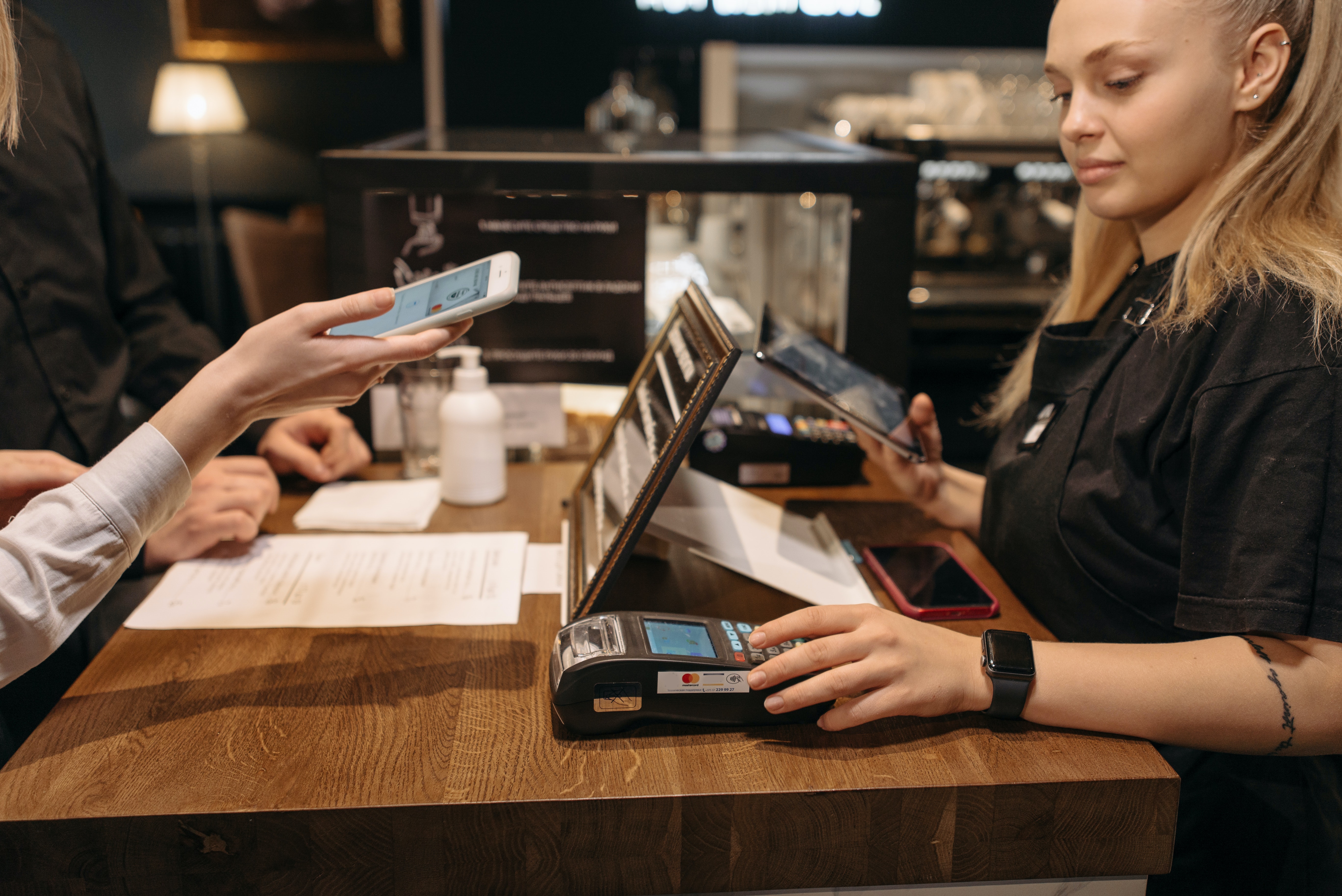
Kursraum für Prinzipien der Mensch-Maschine Interaktion (UXD_PMMI) und Software Prototyping und Usability Testing (UXD_SPUT) inkl. Praktika im SS2025
- Dozent/in: Andreas Löcken
- Dozent/in: Andreas Riegler
- Dozent/in: Andreas Riener
- Dozent/in: Alice Rollwagen
- Mitdozierende/r: Megan Smith
This is the Moodle course room for my Natural User Interfaces (NUI) project. The content changes from year to year. In SS2023 the topic is "Novel applications for mid-air haptic interaction" (group UXDM_NUI.1).
- Dozent/in: Andreas Riener
- Mitdozierende/r: Jakob Peintner
- Dozent/in: Andreas Riener
- Mitdozierende/r: Christian Sturm
- Dozent/in: Andreas Riener
- Mitdozierende/r: Anatoli Djanatliev
- Mitdozierende/r: Alexander Horn
- Mitdozierende/r: Moritz Nagler
- Mitdozierende/r: Niklas Röthlingshöfer
- Dozent/in: Stefan Kugele
- Dozent/in: Andreas Riener
- Dozent/in: Mathias Haimerl
- Dozent/in: Andreas Riener
- Dozent/in: Alice Rollwagen
- Dozent/in: Emely Rosbach
Praktikum UXD_TMIP für WS2025/2026
(Vorlesung: siehe Kursraum Prof. Simon Nestler)
- Dozent/in: Simon Nestler
- Dozent/in: Andreas Riener
- Dozent/in: Stefan Schäffer
In diesem Kursraum werden alle Informationen inkl. Terminen zum Seminar Bachelorarbeit (für UXDB) angegeben.
- Dozent/in: Andreas Riener
- Mitdozierende/r: Ignacio Alvarez
- Mitdozierende/r: Tobias Huber
- Mitdozierende/r: Simon Nestler
- Mitdozierende/r: Veronika Ritzer
- Mitdozierende/r: Ingrid Stahl
- Mitdozierende/r: Christian Sturm
- Mitdozierende/r: Fuat Yüksel
Moodle course room for the UXD project module.
- Dozent/in: Myounghoon Jeon
- Dozent/in: Andreas Riener
Weitere Kurse
Hinweise und Benachrichtigungen für Studenten, die bei Prof. Dr. Thomas Grauschopf ihre Abschlussarbeit anfertigen oder die im VR-Labor eine Hiwi-Tätigkeit übernehmen wollen.
- Dozent/in: Thomas Grauschopf
- Dozent/in: Myounghoon Jeon
- Dozent/in: Andreas Riener
- Mitdozierende/r: Courtney Huck
- Mitdozierende/r: Dahyeon Park
After completing the module, students are able to:
- explain the mathematical and statistical foundations of uncertainty modeling, distinguish between epistemic and aleatoric uncertainty, and contrast modular and end-to-end AD-stack architectures;
- evaluate methods for quantifying and calibrating uncertainty in perception, identify causes of miscalibration, and select appropriate improvement methods;
- analyze how cooperative V2X systems both reduce and introduce uncertainty, and classify concepts for representing, communicating, and propagating uncertainty in cooperative perception architectures;
- describe human behavior and cognitive models of drivers and VRUs and incorporate them into motion prediction;
- formulate probabilistic models for the motion prediction of traffic participants, trace the propagation of uncertainties along the prediction-to-planning chain mathematically, and apply uncertainty-aware planning methods (e.g., RRT variants);
- assess methods for scenario-based validation, runtime monitoring, and the safe integration of automated driving functions under uncertainty, and judge their suitability against relevance and criticality criteria.
- Dozent/in: Michael Botsch
- Dozent/in: Patrick Cato
- Dozent/in: Christian Facchi
- Dozent/in: Andreas Festag
- Dozent/in: Werner Huber
- Dozent/in: Stefan Kugele
- Dozent/in: Pushkar Mahajan
- Dozent/in: Andreas Riener
- Dozent/in: Stefanie Schmidtner
- Dozent/in: Torsten Schön
- Mitdozierende/r: Judeson Anthony Fernando
- Mitdozierende/r: Karthikeyan Chandrasekaran
- Mitdozierende/r: Abinav Kalyana Sundaram
- Mitdozierende/r: Chidvilas Karpenahalli
- Dozent/in: Simon Nestler
- Mitdozierende/r: Andreas Riener
- Dozent/in: Mathias Haimerl
- Dozent/in: Andreas Riener
- Dozent/in: Alice Rollwagen
- Dozent/in: Emely Rosbach
- Dozent/in: Myounghoon Jeon
- Dozent/in: Andreas Riener
- Mitdozierende/r: Dahyeon Park
- Dozent/in: Simon Nestler
- Mitdozierende/r: Andreas Riener